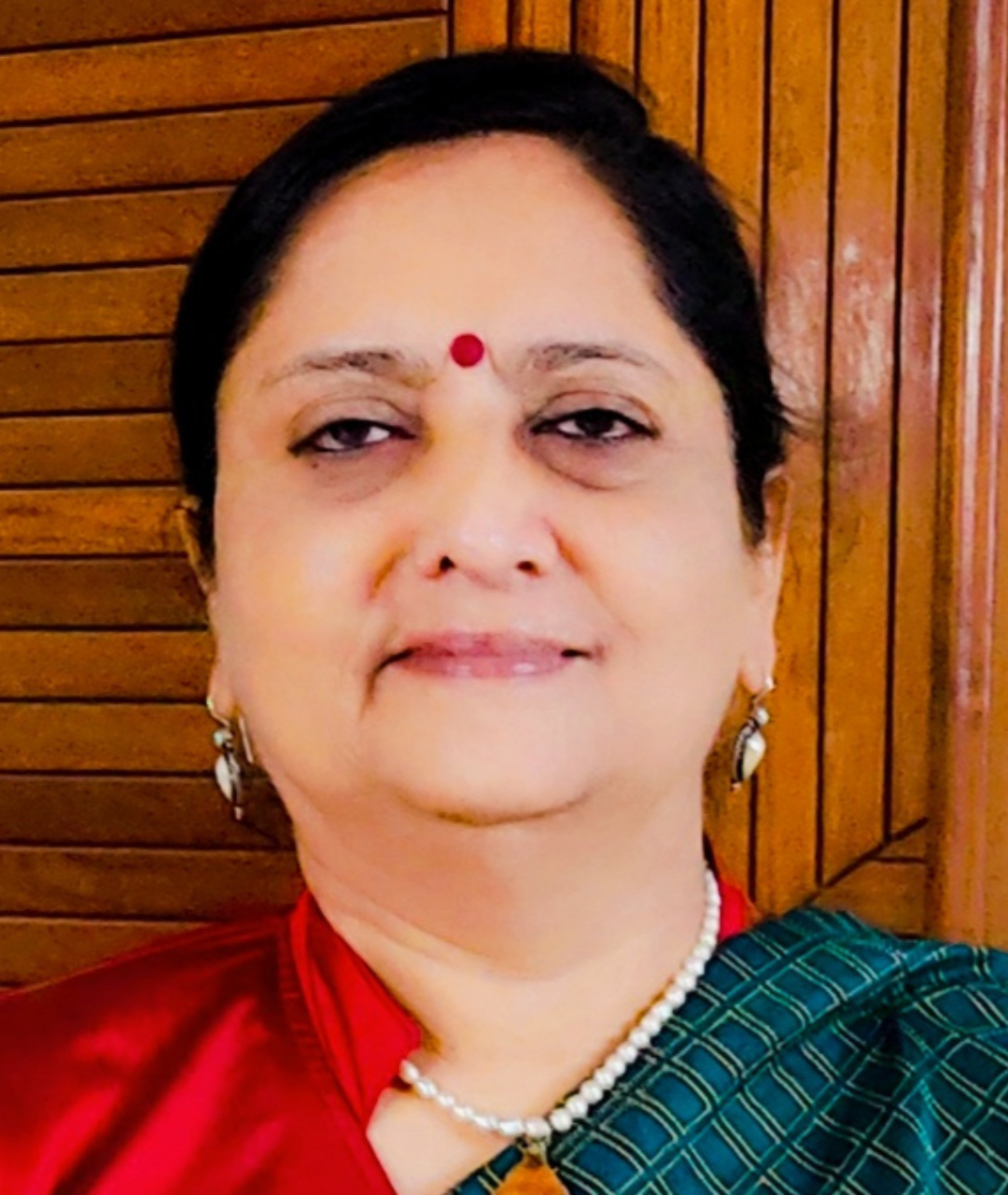
Vibhuti Patel

Keynote Speaker

Biography

Dr. Vibhuti Patel is a distinguished academic and researcher specializing in Gender Economics, Women’s Studies, Development Studies, Human Rights, Social Movements, and Gender Budgeting. She is a former Professor and Head of the Department of Economics at SNDT Women’s University, Mumbai, and former Professor at the Tata Institute of Social Sciences (TISS), Mumbai. Currently, she serves as a Distinguished Visiting Professor at the Impact and Policy Research Institute, Delhi.
Dr. Patel has authored and edited several books and research publications, including works on women’s empowerment, gender inequalities, and women’s rights. She has served on various expert committees and academic boards and is associated with several organizations working on women’s rights, education, and social development. Her research spans over five decades, focusing on gender, human development, social justice, women’s work participation, and climate change.

Abstract

Title: Women’s Leadership and Decision Making: Need for Intersectional Feminist Foreign Policy in the Global South
Abstract: Intersectionality as a perspective in feminist foreign policy encompass international relations defined by multiple intersecting forms of discrimination due to interplay of economic inequalities, sexism, racism, and ableism. Hence, women and gender minorities in the Global South experience discrimination based on economic vulnerability, gender, race and ethnicity/caste/ religion and geographical location. Acknowledgement of intersectionality in the foreign policy and diplomatic discourses is important to identify multiple sites of oppression and fight for gender equality because it is helpful not only to  understand how different forms of discrimination interact and exacerbate inequality, vulnerability and multiple marginalities but also to find the pathways to institutionalise structures, systems and intervention strategies to promote gender inclusive policies, legislations and programmes.  In the absence of consideration for  intersectionality, the global efforts to promote gender equality would remain limited in their impact and even worsen the situation for the most marginalised women and gender minorities within the Global North as well as the Global South. Let is not forget that there is North in the South and there is South in the North. 
The socioeconomically and politically excluded peoples face limited access to basic citizenship rights, health care, education, housing, skills and employment, digital connectivity and resulting in deplorable standard of living. They are prone to be victims of trafficking, homelessness, violence, forced marriages, forced labour and modern form of slavery resulting in complete control of their sexuality, fertility and labour. Intersectional feminism brings the voices of women and gender spectrum experiencing overlapping, concurrent forms of oppression in their praxis and an action agenda. The intersectional lens recognizing the historical contexts and political economy of 200 years of colonisation of Latin America and Asia and 500 years of slavery that was marked by histories of economic exploitation coupled with brutal violence and systematic discrimination resulting in inequities between the rich nations of the North and the poor nations of the South. These inequalities of poverty and deprivation, casteism/ racism/sexism, result in generational violation of democratic rights and equal opportunities.  By charting these epistemic erasures, the feminist foreign policy can direct our efforts for transformative change and consistently engage in difficult conversations on foreign policies, diplomatic moves and international relations.
Feminist movements over last 5 decades have fought for gender justice along with environmental justice, economic justice, distributive justice and social justice. This chapter aims to reflect on the collective efforts and collective wisdom of transactional feminist solidarity and ground level mobilisations to build inclusive and robust movements to solve overlapping forms of discrimination. In the post COVID world marked by the jingoism, cultural nationalism  and zombie capitalism, intersectionality and gender mainstreaming in the Global South in the feminist foreign policy is the only way build back better world. Recent feminist discourses are challenging postcolonial power structures, from the  angle of intersectionality to delve into articulation of genuinely transformative feminist foreign policy by changing the political, economic, cultural and social landscape. They have focussed on human rights and strengthening democracy, campaign against gender based violence, sexual harassment at workplace, women-peace and security agenda in the war zones, gender concerns in trade agreements, gender implications of climate change, access to digital technology, care economy, higher representation, voice and enabling ecosystem for women and LGBTQIA+ people in diplomacy and foreign policy, legislative reforms. Thus Perspective of intersectionality is not concerned only with explaining the global scenario but also with bringing transformative gender responsive changes in the world.

2 Responses

  1. Сайты для взрослых могут служить средством интимного просвещения, а также помощью в понимании личных предпочтений.
    Такие площадки позволяют пользователям изучать свои желания в контролируемой среде, снижая опасность фактических осложнений.
    ero-storitop.com
    Для пар совместное изучение таких материалов может укреплять близость и служить стимулом для честного диалога о предпочтениях и рамках.
    Кроме того такие сайты предоставляют шанс для осторожной разрядки потребностей и снятия психологического напряжения, не нанося ущерба другим.

Leave a Reply

Your email address will not be published. Required fields are marked *

KYNEXA Global Conferences connects researchers, academicians, industry experts, and innovators through world-class international conferences that foster knowledge sharing, collaboration, and scientific excellence.

Copyright © 2026 kynexaconferences