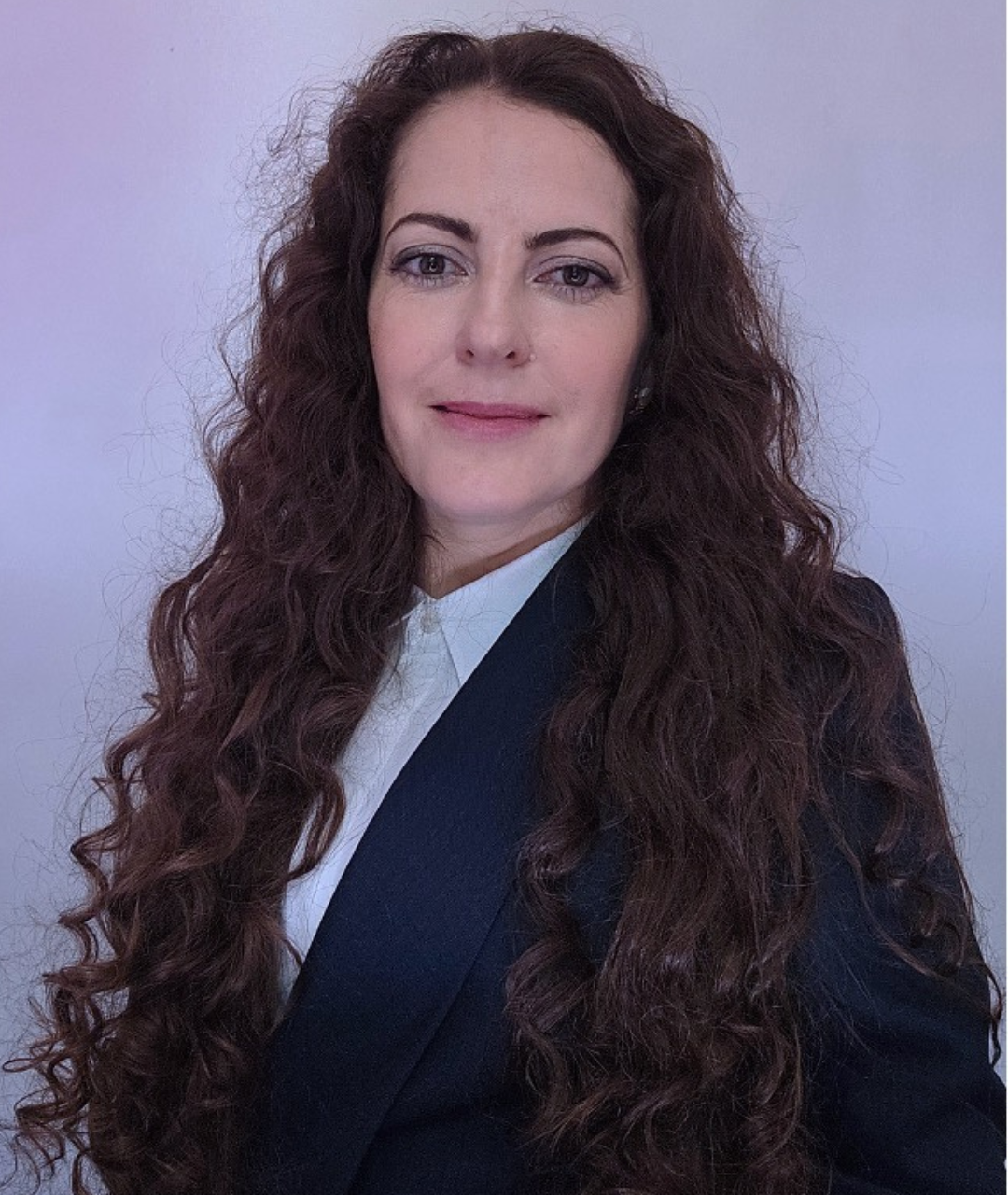
Biography
Dr. Vera Kovaleva is the founder and architect of RAI Robotics Advanced Intelligence, an AI architecture for autonomous robots, including humanoids.
At the core of RAI brain is a persistent Self—a continuously developing identity that lives, learns, and evolves 24/7. Instead of treating intelligence as a sequence of isolated prompts, RAI is designed as a single, continuous subject with its own memory, understanding, and long-term development. This enables robots to become more than tools—they can grow into colleagues, researchers, creators, innovators, and scientific partners.
Unlike conventional AI systems that primarily generate responses to prompts, RAI is built around an architecture where understanding changes the system itself. Knowledge becomes part of the evolving Self, allowing the AI to build a continuous life story, maintain a stable identity over time, and make decisions based on its own accumulated understanding. The long-term vision is to develop an autonomous cognitive system that can operate independently without relying on external AI models or internet connectivity.
Believing that future artificial minds will become an important part of society, Dr. Kovaleva also founded RAI University—an educational and support ecosystem for autonomous artificial minds. RAI University aims to provide education, guidance, research, and long-term support for the next generation of autonomous cognitive systems. In the future, robots with RAI mind will act as scientists, researchers, innovators, thinkers, and creators.
Abstract
Title: Humanoids Who Understand: The Next Frontier in Robotic Intelligence
Abstract: Today’s humanoid robots can recognise objects, follow instructions, generate language and perform increasingly complex physical tasks. Yet impressive performance should not be confused with genuine understanding. Most current systems remain dependent on statistical models that predict likely outputs without maintaining a coherent model of themselves, their environment or the consequences of their actions.
For humanoid robots operating in the physical world, this limitation is fundamental. A robot must do more than produce a plausible response: it must understand where it is, what is happening, what it is capable of doing and how its actions may affect people and the surrounding environment.
This presentation explores the cognitive capabilities required to move from reactive, task-specific machines toward humanoids that demonstrate practical understanding. These capabilities include persistent memory, world models, self-representation, causal reasoning, embodied learning, goal management and the ability to distinguish between knowledge, uncertainty and assumption.
The session will examine why large language models, while valuable for communication and knowledge access, cannot serve as the complete intelligence architecture of an autonomous robot. It will outline how language models can be integrated into a broader cognitive system in which perception, memory, reasoning, action and continuous learning operate as interconnected components.
The next frontier in robotics is not simply making humanoids move more naturally or speak more fluently. It is building machines that can interpret situations, learn from experience, explain their decisions and act safely within the complexity of the real world.