Biography
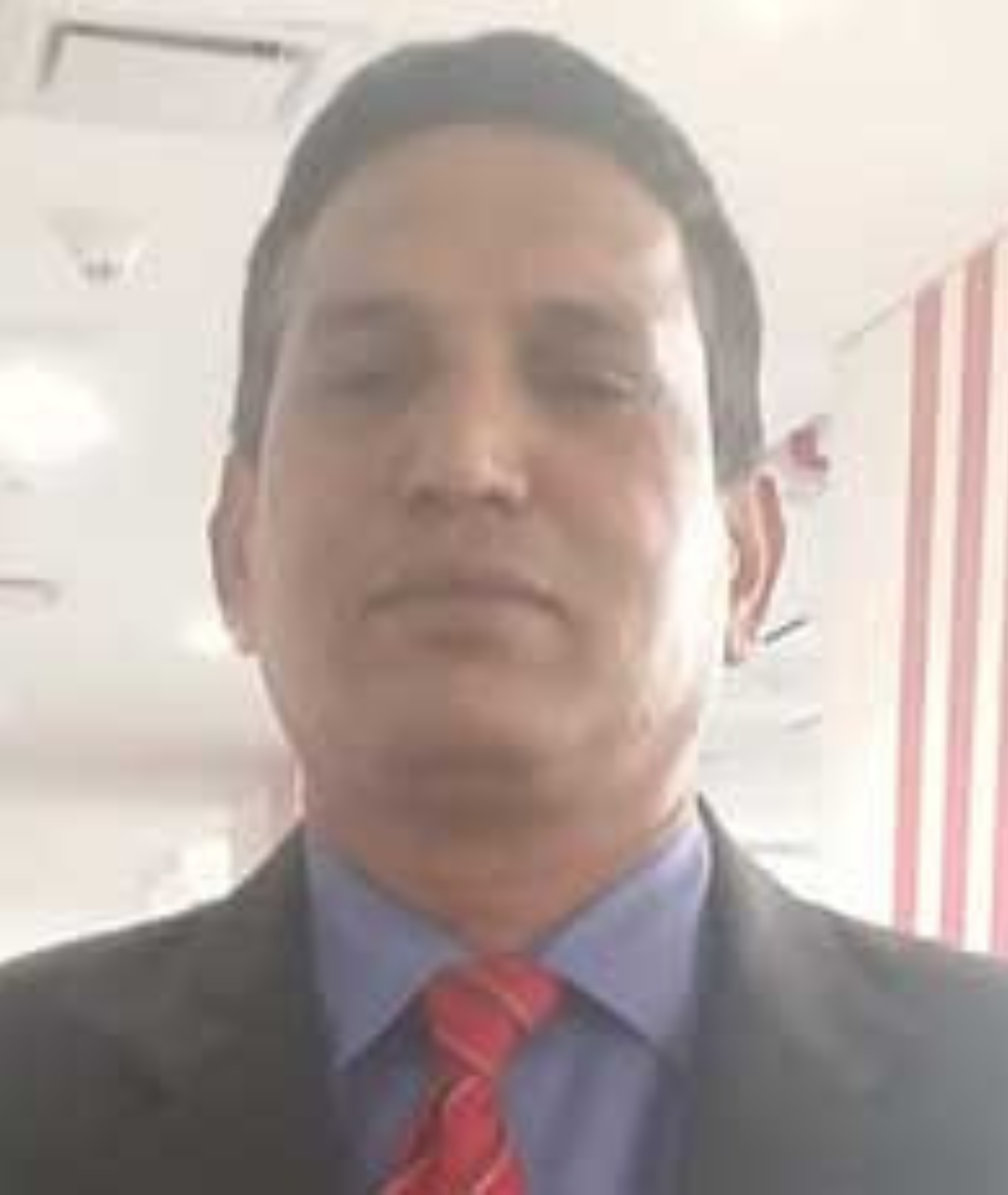
Prof (Dr) Ratnesh Dwivedi is a Seasoned and Award-Winning Media Academic from Russian Communication Association,Moscow, has written & presented 81 Papers across the globe with 40000+ downloads which itself is a record,Author of 51 Books,Globally recognized Journalist with more than 2000+ Articles and NASA Certified Educator and NASA Proposal Reviewer,Award Winning Sec,Intel & Def Expert by SECINDEF & OSI Intel,Israel USA.Professor as well as Collaborating Analyst with OCATRY (Observatory Against the Terrorist Threat and Jihadist Radicalization) at INSISEG,Madrid,Spain. He is Director-TNM with Global Institute for IT Mgt, NY, USA. He is Exclusive Country Director with ESJ-Paris(2017-2025) for India. He is Country Head with Advisers Energy Group, USA and Partner with PET,USA.Int Peace Prize Winner by CPS,Colombo.Prof Dwivedi has served as Dean & Registrar with Yesbud University, Zambia for three years and as Vice-Chancellor of Learnforth University, London for one year. He is CEO of Defense firm Idronewall, Peru, and D-Fence, Israel as well as a Professor with its Military Training School. He Shares Board of Advisers with-
Ray Kurzweil- American Life Saving and Extension Biotechnologist & AI Expert
Daniel Kahneman- 2002 Nobel Prize Winner in Psychology (Judgement & Decision Making)
Eric S Maskin- 2007 Nobel Prize Winner for Mechanism Design Theory
Wole Soyinka- 1986 Nobel Prize Winner in Literature
Richard J Roberts- 1993 Nobel Prize Winner in Physiology for the invention of Introns in DNA.
He started his career as Freelance Feature Writer with Lucknow-based Rashtriya Samachar Features Network (RASFENE) in 1997 and now writes for RIAC, Moscow, корреспондент, Ukraine, RWR, DemCast, USA, Modern Diplomacy, & Tuck Magazine, London. He is Correspondent with European Press Agency and Blue Aurora Media, London. He is on the reviewer’s panel of ECREA,AITNER and NASA. He is Foreign Correspondent at FCC South Asia Since 2015.
He is thrice winner of Open Door Fellowship of the Ministry of Science & Education,Russian Federation in 2020-21,2021-22 & 2022-23 in Earth Sciences, Linguistics & Modern Languages and Education at Tomsk State University, People’s Friendship University and Ural Federal University.In 2025-26 he is participating in the contest for a Post Doc.
He has an earned Ph.D. in Humanities & Social Sc. & 3 Hon. doctorates and fighting a Court Case against Amity University for his fifth Ph.D. He is Pursuing his sixth Ph.D. from Ural Federal University. Russia. He is Founder of Global Advisers & Consultants Corporation with a network in 34 nations.
Abstract
Title: Usage And Impact Of Artificial Intelligence In Russian And Indian Education System-The Way Ahead
Abstract: The rapid evolution of artificial intelligence (AI) technologies has begun to transform fundamental aspects of human life, with education emerging as a critical domain of innovation. Globally, AI is being integrated into education systems to personalize learning, enhance administrative efficiency, support decision-making, and reduce inequalities in access to quality education. As countries strive to align with the demands of the Fourth Industrial Revolution, the deployment of AI in education is no longer a futuristic concept, but a practical imperative.
This doctoral thesis investigates the global and regional trends in the integration of AI in education, with a specific focus on two strategically significant and culturally distinct countries: Russia and India. These nations offer compelling comparative case studies due to their shared ambitions of becoming knowledge economies, their vast and diverse populations, and their proactive policy initiatives in both digital transformation and AI deployment. While Russia emphasizes centralized technological development and research-led innovation, India exhibits a more decentralized and grassroots-oriented approach to edtech, driven by both public and private sectors.
Globally, AI applications in education have shown promising developments in adaptive learning platforms, intelligent tutoring systems, predictive analytics, automated grading, and language processing tools. Countries such as the United States, China, and South Korea have already established frameworks and invested heavily in AI-driven educational ecosystems. In contrast, emerging economies are navigating the dual challenges of infrastructural limitations and the need for skilled human capital while attempting to leverage AI’s transformative potential.
In this context, the regional dynamics of AI adoption in education in Russia and India deserve critical scholarly attention. Russia has launched strategic initiatives like the “Digital Economy Program” and “Artificial Intelligence 2030” that outline specific goals for AI implementation across sectors, including education. Meanwhile, India’s “National Education Policy 2020” and programs like “AI for All” aim to democratize access to AI tools and build capacity among students and educators alike..